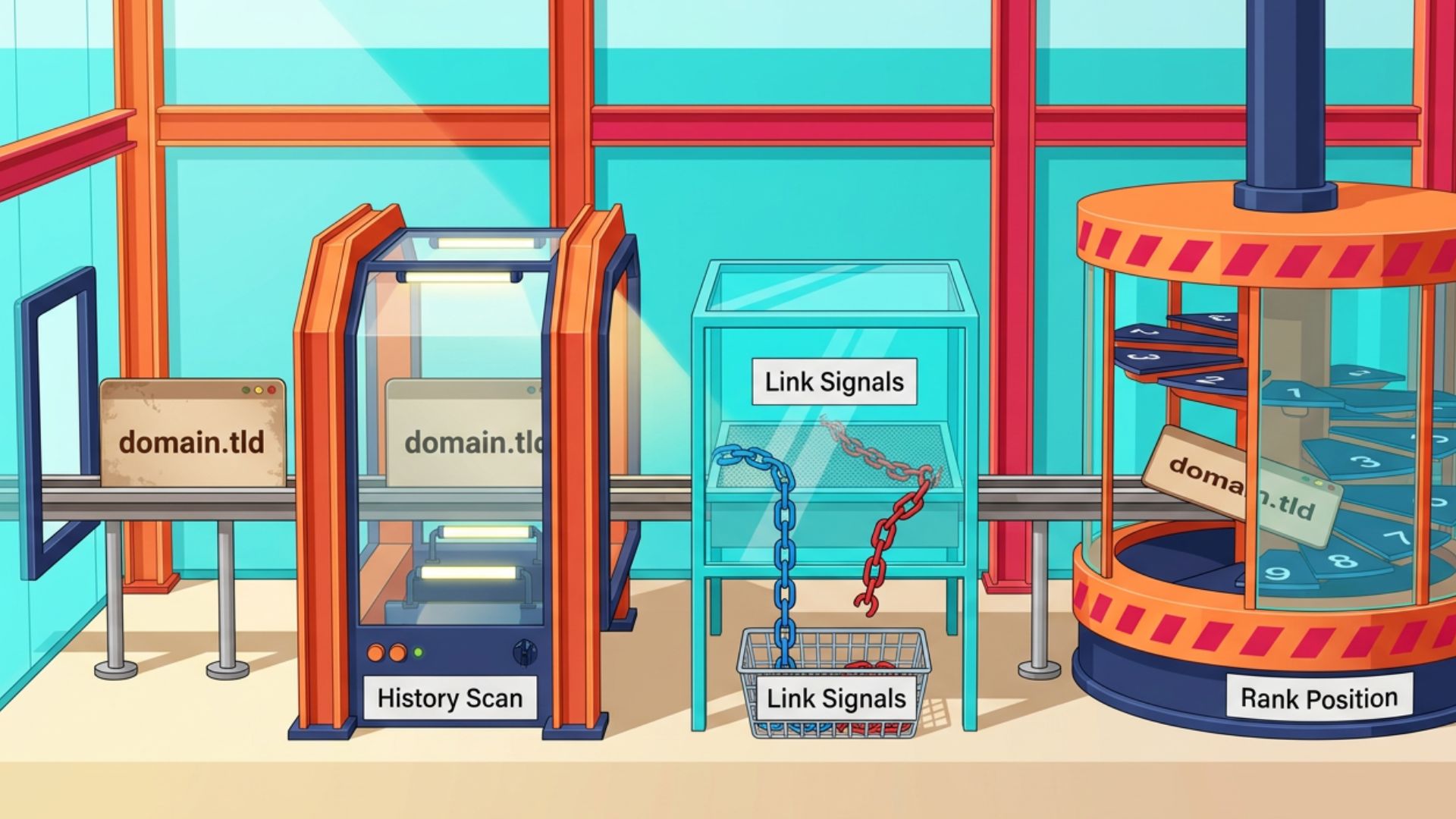

Domain Rating (DR) is a commonly referenced SEO metric used to evaluate the relative strength of a website’s backlink profile. It is often used by SEO professionals, marketers, and website owners as a quick way to compare websites and understand their overall link authority.
However, like many SEO metrics, DR can be misinterpreted when viewed in isolation. To use it effectively, it’s important to understand its purpose, its limitations, and how it fits into a broader SEO strategy.
In this guide, we’ll take a closer look at Domain Rating, explain how it should be interpreted, and explore the key factors that influence its role in SEO decision-making.
What Is Domain Rating (DR)?
Domain Rating (DR) is a proprietary SEO metric developed by Ahrefs that measures the strength of a website’s backlink profile. It assigns a score on a logarithmic scale from 0 to 100, with higher scores generally indicating a stronger backlink profile relative to other websites in Ahrefs’ index.
Rather than evaluating a website’s overall quality, DR focuses specifically on backlinks. It reflects the authority passed through followed links from unique referring domains, making it a useful metric for assessing a site’s link profile and comparing it with competitors.
It’s important to understand that Domain Rating is an Ahrefs metric, not a Google ranking factor. While websites with a high DR often perform well in search results because they tend to have strong backlink profiles, Google does not use Domain Rating when determining rankings.
Instead, DR should be viewed as a benchmarking tool that helps SEO professionals analyze backlink strength, compare websites within the same niche, and track link-building progress over time.
How Ahrefs Calculates Domain Rating
Ahrefs calculates Domain Rating by analyzing the strength of a website’s backlink profile rather than its content, traffic, or search performance. Although the exact algorithm is proprietary, Ahrefs has publicly explained the core principles behind the metric’s determination.
The score is based on the quality and quantity of referring domains, the distribution of authority through followed links, and the relative strength of websites within Ahrefs’ backlink index. Each factor contributes differently to the final score, which is why two websites with a similar number of backlinks may still have very different DR scores.
Factors That Influence Domain Rating
Several backlink-related factors contribute to a website’s Domain Rating:
- Unique referring domains: Links from more unique websites generally have a greater impact than multiple backlinks from the same domain. This is because DR emphasizes the number of referring domains rather than the total number of backlinks.
- Authority of linking websites: Backlinks from websites with stronger backlink profiles typically pass more authority than links from less authoritative domains.
- Followed backlinks: Domain Rating is calculated using followed backlinks that can pass link equity. Nofollow, sponsored, and user-generated content (UGC) links do not directly contribute to the score.
- Distribution of link equity: The authority passed by a linking website is shared across the domains it links to. For example, a website that links to only a handful of domains can pass more authority per link than one that links to thousands of different websites.
- Logarithmic scoring: Domain Rating uses a logarithmic scale from 0 to 100. As a result, increasing a score from DR 20 to 30 requires much less backlink authority than moving from DR 70 to 80.
For example, increasing a website’s DR from 15 to 25 may require earning backlinks from only a handful of strong referring domains. Moving from DR 70 to DR 80, however, usually requires significantly more high-authority referring domains because Domain Rating becomes harder to increase at higher levels.
What Doesn’t Affect Domain Rating
While backlinks determine Domain Rating, many other SEO factors do not influence the metric. These include:
- Organic traffic
- Content quality
- Keyword rankings
- On-page SEO optimization
- User experience and Core Web Vitals
- Technical SEO factors such as page speed or mobile friendliness
These elements can significantly affect a website’s overall SEO performance, but they are not used to calculate Domain Rating. Instead, DR focuses exclusively on the strength of a website’s backlink profile, as measured by Ahrefs’ methodology.
Because Domain Rating measures only backlink strength, it should always be interpreted alongside metrics such as organic traffic, keyword visibility, search performance, and overall website quality. This gives a more accurate picture of a website’s real SEO value than relying on DR alone.
Domain Rating vs. Other SEO Authority Metrics
Domain Rating is one of several authority metrics used in SEO to evaluate websites and webpages. While these metrics often serve similar purposes, each is developed by a different company and uses its own methodology.
Understanding the differences can help you choose the right metric for your analysis and avoid making direct comparisons between scores from different tools.
| Metric | Developed By | What It Measures | Best Used For |
| Domain Rating (DR) | Ahrefs | The strength of a website’s backlink profile based on the quality and quantity of referring domains. | Evaluating and comparing website backlink profiles. |
| Domain Authority (DA) | Moz | A predictive metric that estimates a website’s potential to rank in search results using multiple signals. | Comparing the relative ranking potential of websites. |
| URL Rating (UR) | Ahrefs | The strength of an individual webpage’s backlink profile rather than the entire domain. | Evaluating the authority of specific pages. |
| PageRank | A link analysis algorithm that measures the importance of webpages based on the links pointing to them. Although Google’s public PageRank scores are no longer available, the concept remains part of Google’s ranking systems. | Understanding the foundation of modern link-based ranking algorithms. |
Although these metrics can provide valuable SEO insights, they should not be used interchangeably. Each one measures authority differently and serves a specific purpose. Instead of focusing on achieving a particular score, use these metrics to evaluate backlink profiles, benchmark competitors, and support data-driven SEO decisions.
What Causes Domain Rating to Change?
Domain Rating is not a fixed score. It changes as your website’s backlink profile evolves and as Ahrefs updates its backlink index. Because DR is measured on a relative scale, your score can increase or decrease over time, even if you haven’t made significant changes to your website.
Your Domain Rating may increase when you:
- Earn followed backlinks from new referring domains.
- Receive backlinks from websites with stronger backlink profiles.
- Strengthen your backlink profile faster than other websites in Ahrefs’ index.
Your Domain Rating may decrease when you:
- Lose followed backlinks from referring domains.
- Linking websites lose authority or remove backlinks pointing to your site.
- Ahrefs discovers new backlinks across the web, changing the relative distribution of authority within its index.
Changes in Domain Rating don’t always reflect improvements or declines in your overall SEO performance. Since DR measures backlink strength relative to other websites, occasional fluctuations are normal. Instead of focusing on short-term changes, prioritize earning high-quality, relevant backlinks to build a stronger, more sustainable backlink profile.
How to Check Your Domain Rating
Checking your Domain Rating takes only a few moments with Ahrefs. Enter your domain into the Ahrefs Website Authority Checker or your Ahrefs account to view your current DR score, referring domains, backlink profile, and other authority-related metrics.
Rather than focusing solely on the DR number, review the quality of your referring domains, recent backlink growth, and how your backlink profile compares with competing websites in your niche. These insights are often more valuable than the score itself when evaluating your SEO performance.
How to Improve Your Domain Rating Naturally
Improving Domain Rating comes down to earning stronger backlinks from diverse, reputable websites. Focus on these best practices:
- Earn backlinks from authoritative, relevant websites. Editorial backlinks from trusted websites in your niche generally carry more value than numerous low-quality links.
- Increase your referring domains. Links from different websites have a greater impact on Domain Rating than multiple backlinks from the same domain.
- Create link-worthy content. Publish original research, in-depth guides, case studies, or free tools that other websites naturally want to reference.
- Reclaim lost backlinks. Regularly monitor your backlink profile and recover valuable backlinks that have been removed or broken.
- Avoid manipulative link-building tactics. Stay away from paid link schemes, spammy directories, and other practices that violate Google’s spam policies.
Conclusion
Domain Rating is a valuable SEO metric for evaluating the strength of a website’s backlink profile, but it should always be viewed in the right context. While it can help you compare websites, assess backlink opportunities, and track link-building progress, it is not a Google ranking factor. It does not measure a website’s overall SEO performance.
Instead of chasing a specific DR score, use Domain Rating as one of several metrics to evaluate backlink quality, benchmark competitors, and measure the long-term impact of your link-building efforts. The strongest websites achieve high Domain Ratings by consistently earning relevant, authoritative backlinks while creating content that provides genuine value to their audience.