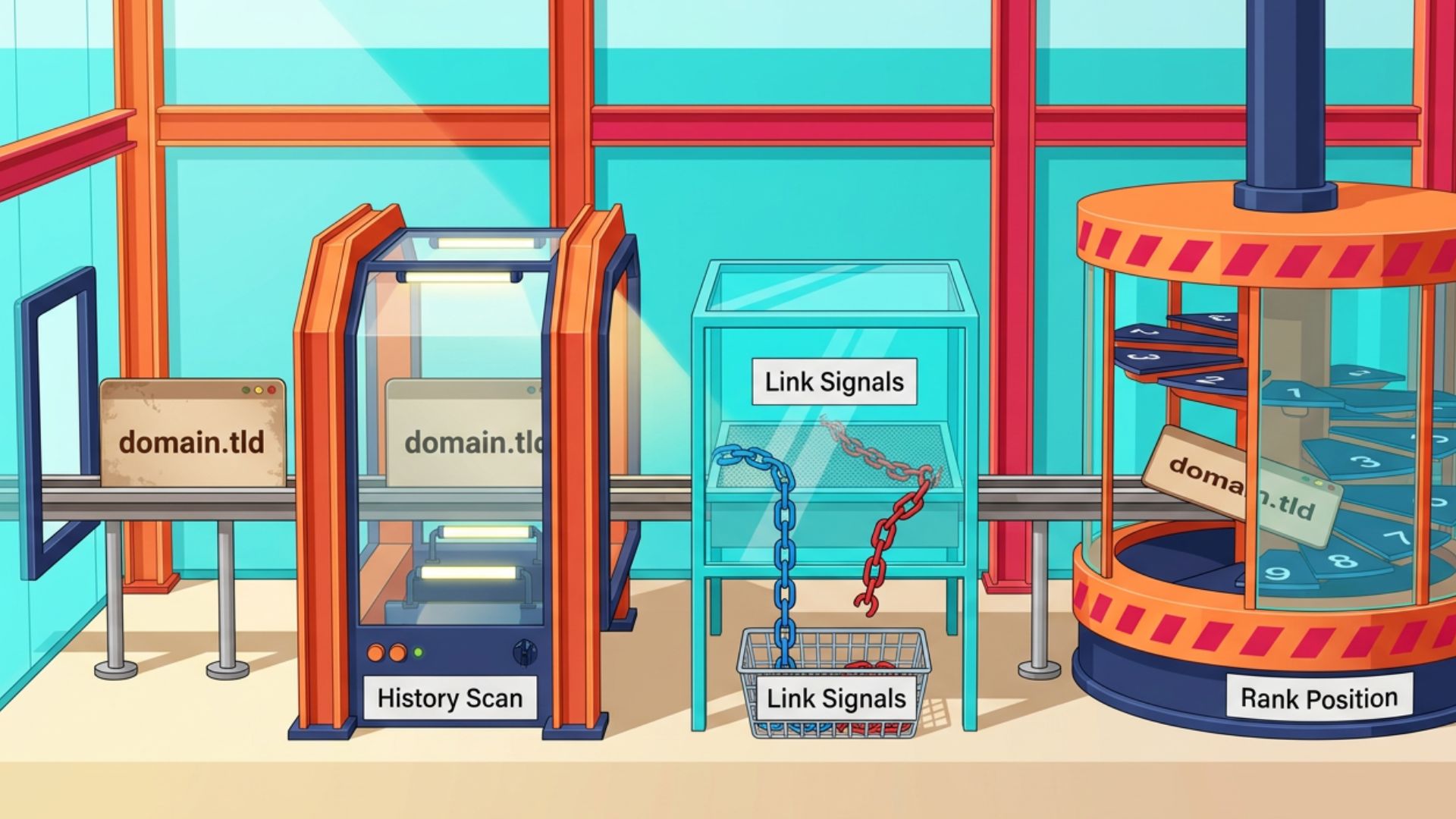

Building a private blog network often starts with finding domains with an established history and backlink profile. That can make expired domains attractive, but not every domain with strong SEO metrics is worth buying. Some may have been used for spam, carry irrelevant or manipulated backlinks, or have a history that creates problems later. Finding the right candidates requires looking beyond surface-level numbers. This guide explains how to assess PBN domains more carefully, identify common warning signs, and make better-informed choices before spending money.
What to Look for in a Quality PBN Domain
A quality Private Blog Network (PBN) domain should have more going for it than a strong SEO score. Before looking at individual metrics, consider whether its history, backlinks, and previous use tell a consistent story. These initial checks help separate those that deserve further investigation from those you should reject early.
A Consistent and Legitimate History
Look for a domain used consistently for a legitimate purpose. Frequent changes between unrelated industries, obvious spam periods, or sudden shifts in how the site was used can make its history harder to trust.
Relevant and Credible Backlinks
The value of an existing backlink profile depends on where those links come from and why they exist. Relevant links from credible websites provide more useful evidence than a large number of links from low-quality or unrelated sources.
Natural Anchor Text
Review whether the anchor text reflects how people would reasonably link to the site. A profile dominated by repetitive exact-match commercial terms or unrelated keywords can indicate artificial link building and deserves closer investigation.
Consistent Topical Relevance
The domain’s historical subject should align with its backlinks and intended use. A strong metric profile does not compensate for a history that has little connection to the site you plan to build.
SEO Metrics That Match the Evidence
DA, DR, Trust Flow, traffic estimates, and similar metrics can help filter candidates, but they should confirm what the underlying evidence shows. If the numbers look strong while the history and backlink profile look questionable, the metrics should not override those findings.
No Obvious Signs of Manipulation
A candidate should not show clear evidence of spam, artificial link patterns, mass-generated content, or previous PBN use. These signals don’t automatically determine how Google will treat the domain, but they are strong reasons to investigate further or walk away.
Start With the Domain’s History
Before reviewing SEO metrics, find out how the domain was used in the past. Check several Wayback Machine snapshots across different years to see whether it consistently served a legitimate purpose or moved between unrelated topics. Pay particular attention to the site’s content and purpose shortly before it expired, since a clean early history doesn’t rule out later spam or manipulation.
Look for major changes in niche, content type, or site purpose. A domain that went from a legitimate website to an unrelated casino, pharmaceutical, adult, or mass-generated content deserves closer scrutiny, especially if those changes coincide with unusual backlink activity. Google does not prohibit legitimate reuse of an expired domain, but repurposing one primarily to manipulate Search rankings with low-value content falls under its expired-domain-abuse policy.
Audit the Backlinks That Give the Domain Its Value
A domain’s backlink profile deserves more attention than its headline metrics. Review the referring domains behind the reported backlink count, and assess whether those websites are legitimate, relevant, and able to provide meaningful editorial context. A smaller profile made up of credible, relevant sites can tell you more about its history than thousands of links from directories, low-quality sites, or unrelated pages.

Then examine the anchor text and how the links developed over time. Repeated exact-match commercial anchors, unrelated keywords, sudden increases in referring domains, or large volumes of links appearing within a short period can warrant closer investigation. The goal isn’t to find a backlink profile that looks perfect, but to understand whether its apparent authority is supported by links that make sense in context.
Check Whether the Domain Still Has a Relevant Topic
The domain’s historical topic should make sense with the websites that link to it and the type of site you intend to build. A domain that consistently covered a subject related to your intended use provides a clearer context for its existing backlinks than one that has repeatedly shifted between unrelated industries. This doesn’t mean the topic must stay identical, but major changes should have a reasonable explanation.
Compare the site’s previous content with the subjects covered by its strongest referring domains and backlinks. If it has strong links from websites relevant to its historical niche but you plan to use it for a completely unrelated subject, the apparent authority may not translate as expected. Consider relevance alongside backlink quality, not as a separate metric.
Use SEO Metrics to Confirm Your Findings, Not Replace Them
SEO metrics such as Domain Authority (DA), Domain Rating (DR), Trust Flow, Citation Flow, referring-domain counts, and estimated organic traffic can help narrow down potential candidates. However, these numbers come from third-party tools and should be treated as indicators, not proof of quality. A high score does not tell you whether the backlinks are relevant, whether it has a clean history, or whether those links have meaningful value.
Use the metrics to support what you have already found through historical and backlink checks. If it has strong scores but most of its referring domains are low quality, its history is inconsistent, or its backlinks show obvious manipulation, the numbers should not override those findings. No universal DA, DR, or Trust Flow threshold makes a domain suitable or safe for PBN use.
Check for Spam and Previous Search Problems
Review the domain for signs of previous spam or search-related problems before buying it. Look for periods of low-quality or automatically generated content, unrelated commercial pages, unnatural outbound linking, and other evidence that the site may have been repurposed. Also check whether its historical traffic or visibility changed sharply without an obvious reason. These signals don’t prove Google issued a penalty, but they can indicate that it needs closer investigation.
Keep in mind that third-party tools cannot confirm every action Google’s systems may have taken against a domain. A domain can have strong metrics and still have problematic signals that those scores don’t capture. After acquisition, Search Console can provide information about manual actions for a verified property, but a clean Manual Actions report should not be treated as a guarantee that the domain or its links will perform well in Search.
A Practical PBN Domain Vetting Process
Once you have a list of potential domains, evaluate them consistently rather than buying based on one attractive metric. Use the following process to filter candidates before spending money on a domain:
- Build a candidate list. Start with expired domains, auction listings, or other legitimate sources and collect more candidates than you expect to buy. This gives you enough options to eliminate domains that fail later checks.
- Check historical use. Review several Wayback Machine snapshots to see what the site was used for and whether its topic remained reasonably consistent. Pay particular attention to its most recent history, where previous owners may have introduced spam or unrelated content.
- Audit the backlink profile. Review the referring domains, important backlinks, anchor text, and link-growth history. Look beyond the reported totals to determine whether the links come from relevant, credible websites and whether the profile shows signs of manipulation.
- Confirm topical relevance. Compare the domain’s historical subject with the topics of its strongest backlinks and the site you intend to build. These elements should connect logically rather than relying solely on authority metrics.
- Check spam and search signals. Investigate signs of spam, unusual traffic changes, indexation issues, and previous search problems. Treat these as signals that require investigation, not automatic proof of a Google penalty.
- Compare the evidence before buying. Consider the domain only after the different checks support a consistent picture. If the metrics look strong but the history or backlinks raise serious concerns, weigh the underlying evidence more than the headline numbers.
Can a Quality PBN Domain Guarantee You Won’t Be Penalized?
No. A domain can have a clean history, relevant backlinks, and strong third-party metrics, but none of these checks can guarantee how Google’s systems will treat it. Google’s policies focus on the site’s purpose and behavior, including links created primarily to manipulate rankings and the misuse of expired domains to manipulate Search.
Domain vetting can reduce the chance of buying a candidate with obvious spam or a problematic history, but it does not remove the underlying risk associated with manipulative link building. A clean Manual Actions report or strong SEO metrics should therefore be treated as evidence to consider, not a guarantee that a PBN will avoid ranking losses, link devaluation, or other action from Google’s systems.
Conclusion
Finding a quality PBN domain requires more than comparing DA, DR, traffic, or backlink counts. A stronger candidate has a history, backlinks, topical relevance, and SEO metrics that tell the same story and show no obvious signs of manipulation. Reviewing those signals before buying can help filter out domains with questionable histories and misleading metrics.
However, thorough vetting cannot guarantee that a domain will avoid Google’s spam systems. The safest approach is to treat every metric as supporting evidence, investigate its history, and walk away when the evidence doesn’t add up.