Two domains can be the same age and have completely different SEO prospects. One may have a history of useful content, legitimate links, and steady activity. Another may have been abandoned, repurposed across unrelated niches, or used for manipulative SEO. Yet a buyer looking only at registration date or authority metrics could easily treat them as equals. That is where expensive mistakes happen. Before acquiring a previously used domain, buyers need to know what they are actually taking on. Its past may be more important than its age.
Does Domain History Affect SEO Rankings?
A domain’s past can affect the SEO situation a buyer inherits, but not because Google rewards an older registration date. Google does not use domain age as a direct ranking advantage. Instead, a previously used site may have existing search-related conditions, such as a manual action or a history of spam, that a new owner needs to investigate. Its history can also reveal whether the site has built legitimate value relevant to the new project.
An old registration date does not make a website more trustworthy in Google’s eyes. A domain registered 15 years ago does not receive a ranking boost simply for reaching that age.
Older names can sometimes seem more valuable because they may have been used for years and accumulated legitimate links, content, and search visibility. Those are consequences of a site’s history, not rewards for its registration date. A buyer should therefore treat age as background information, not evidence of SEO value.
Which Parts of a Domain’s History Matter for SEO?
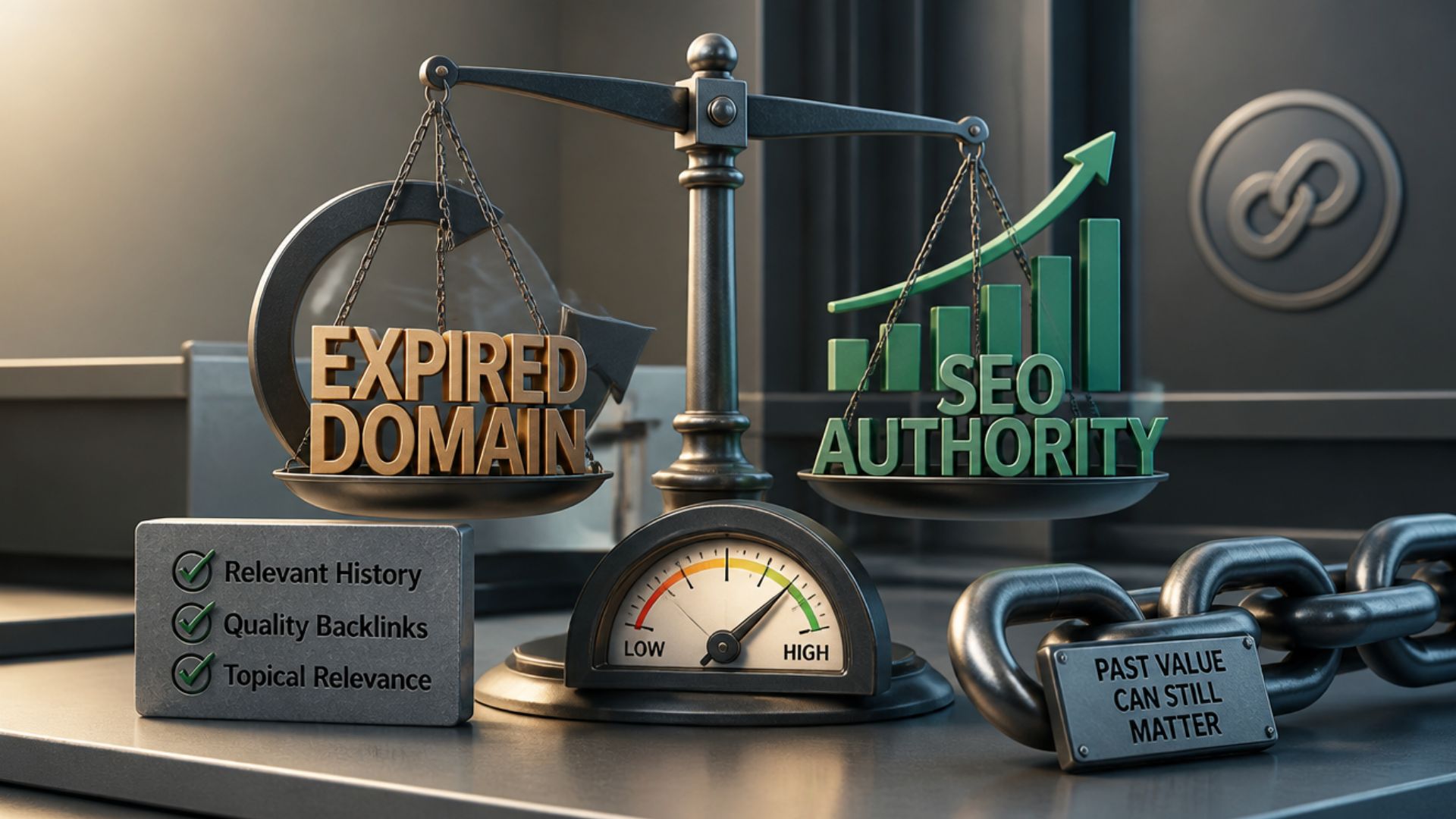
Not every detail from a domain’s past has the same SEO significance. The useful question is whether its previous use left behind signals, problems, or expectations that could affect the new site. Buyers should pay particular attention to its content, backlink profile, spam history, search visibility, and how closely its previous purpose matches the planned site.
Previous Website Use and Content
Start with what the site actually published and what it was known for. Archived pages can reveal whether it consistently covered a specific subject, changed industries several times, or eventually became a source of thin or unrelated content. This matters because a sharp change in purpose can make the site’s historical value less relevant to the new project. Acquiring a former industry publication for a related publication is very different from turning a former local organization into an unrelated commercial site.
Historical Backlinks and Referring Domains
Backlinks can contribute to Google’s ranking systems, but their value depends on their quality and context. A large backlink count doesn’t prove a domain has useful authority. Review where the links came from, why those sites linked to it, whether the referring pages are still live, and whether the links relate to the subject of the new site. Don’t treat links created through spam or manipulation as assets just because they appear in an SEO tool.
Previous Spam and SEO Manipulation
A history of spam deserves closer scrutiny than a simple ranking drop. Look for signs such as large amounts of low-quality content, unnatural link-building, hacked pages, or repeated use across unrelated niches. Google’s systems can neutralize the benefits of spammy links, while deliberately repurposing an expired domain to manipulate rankings can fall under its expired domain abuse policy.
Manual Actions and Security Issues
Manual actions are a more direct concern because they can restrict a site’s appearance in Google Search. Google specifically recommends that new owners check Search Console’s Manual Actions and Security Issues reports after acquiring a site. A buyer should therefore distinguish between a domain with an imperfect past and one carrying an unresolved search or security problem.
Search Visibility and Traffic History
Historical rankings and organic traffic can show that a site once had genuine search visibility, but they don’t guarantee the new site will regain it. You should also examine traffic source and relevance. A domain that once attracted visitors through a completely different topic may have little practical SEO value for a new business, even if its historical traffic numbers look impressive.
Topical Continuity
The closer the previous site’s purpose is to the new one, the easier it is to understand why its historical links and content might remain relevant. A major subject shift doesn’t automatically prevent a site from ranking, but it makes claims about inherited SEO value much harder to justify.
How to Investigate a Domain’s SEO History Before Buying
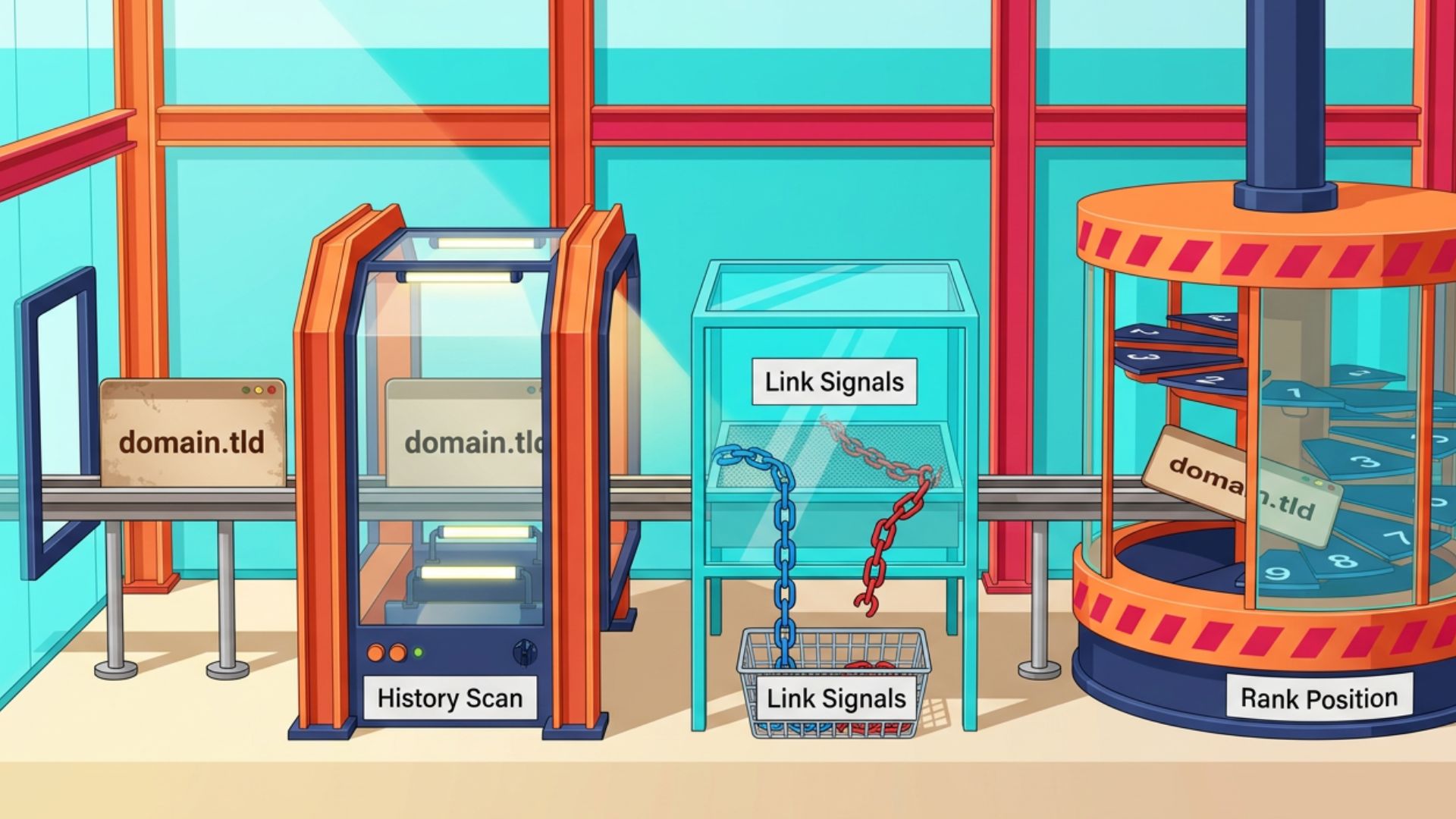
A seller’s asking price or third-party authority score cannot tell the full story. Before buying, examine independent evidence of how the site was used, where its links came from, and whether it had legitimate search visibility. The goal is not to prove that the name is “powerful,” but to uncover anything that could make the acquisition valuable, risky, or unsuitable.
Review Historical Website Content
Use archived snapshots to see what the site actually looked like at different points in time. Check several years rather than relying on its most recent version.
Look for:
- Consistent use within one industry or subject
- Major changes in purpose or niche
- Large periods of inactivity
- Thin, automatically generated, or spam-heavy pages
- Signs that the site was hacked or filled with unrelated content
Pay particular attention to periods immediately before and after major changes. A clean-looking snapshot from one year doesn’t rule out problematic use in another.
Analyze the Backlink Profile
Review the referring domains and the pages receiving links, not just the total number of backlinks. A smaller set of relevant editorial links can be more meaningful than thousands of links from unrelated or low-quality sites.
Check the anchor text as well. A profile dominated by commercial keywords, unrelated phrases, or obvious spam patterns deserves further investigation. Also verify whether important links still exist. Historical backlinks can disappear when referring pages are removed, websites close, or URLs change, so don’t treat an SEO tool’s historical totals as current value.
Check Search Visibility and Indexing
Search for the name and previous brand to understand whether the site had a genuine presence in search. Where available, review historical traffic and ranking data rather than relying on the seller’s claims.
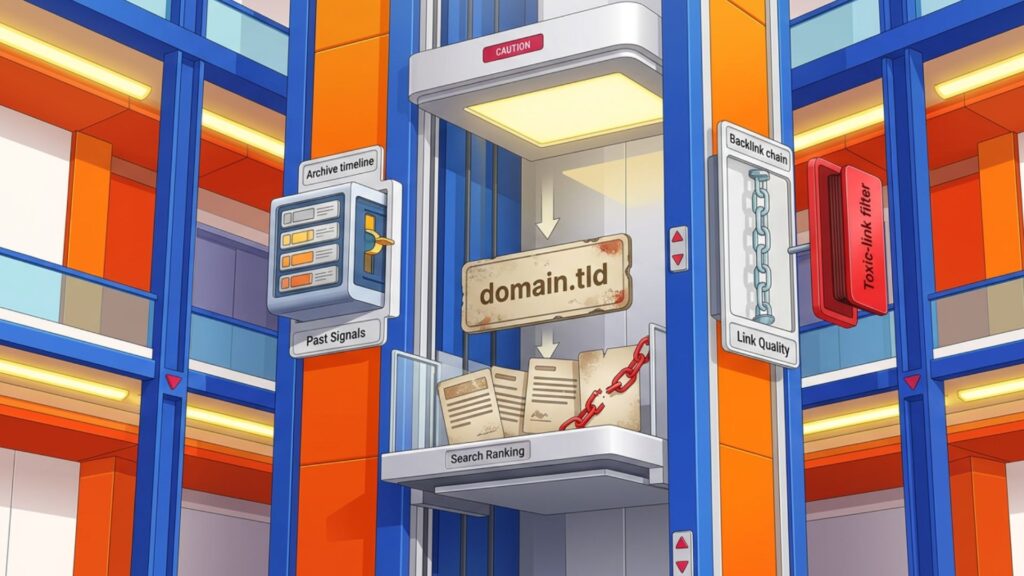
A sudden loss of visibility is worth investigating, particularly when it coincides with a major content change, spam activity, or other unusual event. However, a traffic decline alone does not prove that Google penalized the site. There may be many other explanations.
Check for Manual Actions and Security Issues
After acquiring the site, verify its status in Google Search Console. Google’s documentation specifically recommends checking the Manual Actions and Security Issues reports when taking over a previously owned site.
This is an important distinction for buyers: third-party tools can reveal clues about a site’s past, but they cannot replace access to Search Console for checking these Google-specific issues.
Review Ownership and Major Changes
Look at the site’s lifecycle, including periods when it was active, inactive, sold, or repurposed. Multiple changes in industry or purpose can reveal a very different history from what a seller’s listing suggests. The more frequently the site changed hands or niches, the more carefully you should evaluate its historical links, content, and search performance.
Domain History Red Flags That Should Make You Walk Away
Not every issue means a purchase is automatically unsafe. Some problems can be fixed, while others indicate that the advertised SEO value is largely illusory. The key is to distinguish a manageable flaw from a history that gives little reason to expect useful value from the acquisition.
Unrelated Historical Niches
A domain that has repeatedly moved between unrelated industries deserves caution. For example, a name previously used for a local business, then a gambling site, and later an affiliate project has a very different history from one consistently serving the same audience.
The more disconnected the past is from the planned site, the weaker the case for paying a premium based on historical SEO value.
Spam-Heavy or Hacked Content
Archived pages filled with auto-generated text, pharmaceutical spam, gambling pages, or other unrelated material are warning signs. Evidence that the site was hacked is also important, particularly if malicious or deceptive pages remained indexed.
One isolated incident may not tell the whole story. Repeated or prolonged abuse is much more concerning.
Manipulative Backlink Patterns
Be cautious when a large backlink profile is built around obvious link schemes rather than genuine editorial references. Warning signs include:
- Large numbers of unrelated referring sites
- Repetitive commercial anchor text
- Links from obvious private networks or spam sites
- Sudden, unexplained bursts of backlinks
- Links that have little connection to the site’s subject
A high authority score cannot turn a questionable link profile into a safe investment.
Serious Search Visibility Problems
A history of disappearing from search results or losing most organic traffic warrants investigation before purchase. The decline may have resulted from a core update, technical problems, changing demand, lost links, spam, or other causes.
The important point is not to assume that previous rankings will return simply because the old content or backlinks are restored.
Existing Manual Actions or Security Issues
An unresolved manual action or security problem is one of the clearest reasons to stop and investigate further. These issues can directly affect search visibility and require more than simply launching a new website.
The “Age Is the Value” Pitch
Be especially skeptical when the main selling points are the registration date, domain authority metrics, backlink counts, or claims that the name has “Google trust.”
Those numbers may be useful for research, but they don’t prove the acquisition will improve rankings. If removing the age and third-party metrics leaves little genuine value, the asking price may be difficult to justify.
Should You Buy the Domain or Start With a New One?
There is no universal SEO advantage to choosing an older name over a new one. The better option depends on what the historical evidence shows and whether that history fits the website you plan to build.
An Older Domain May Make Sense When…
Consider the acquisition when it has:
- A legitimate and well-documented history
- Relevant, natural backlinks
- Consistent use within a related subject
- No obvious history of spam or manipulation
- A clear connection to the new business or project
- Historical assets that justify the purchase price
In this situation, the past can provide useful context and potentially valuable assets without making the age itself the reason to buy.
A New Domain May Be Safer When…
Starting fresh can be the better choice when the history is difficult to verify or contains significant concerns, such as:
- Repeated changes between unrelated niches
- A suspicious backlink profile
- Extensive spam or hacked content
- Serious unexplained losses in search visibility
- An unresolved manual action or security issue
- Little legitimate value beyond age or third-party metrics
A clean slate can be more practical than spending time and money trying to determine whether you can overcome a questionable history.
Conclusion
A domain’s registration date tells buyers very little about its SEO potential. What deserves closer attention is the history behind it: how the site was used, which links it earned, whether it experienced spam or search problems, and how closely that past fits the website planned for it.
That history does not guarantee rankings, but it can reveal both useful assets and risks before money changes hands. The safest approach is simple: don’t buy an old domain just because it is old. Buy it because its history is legitimate, relevant, and worth taking forward.