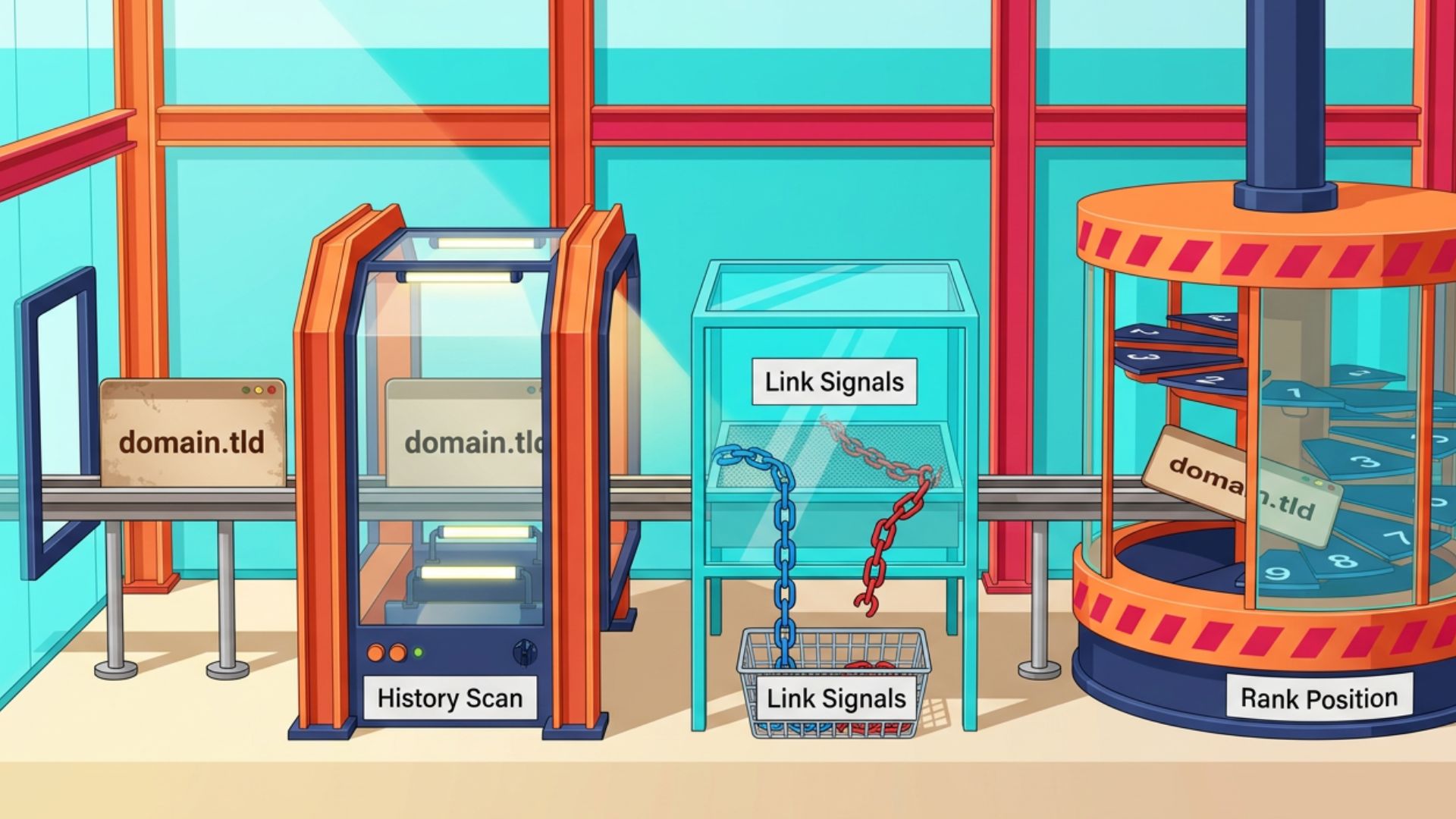
A newly registered domain can cost only a few dollars, yet some older ones sell for hundreds or even thousands. At first glance, paying that much for something you can register cheaply may seem hard to justify. The difference often comes down to what the buyer is actually acquiring. Some established names have a useful history, quality links, brand recognition, or other assets that would take years to build from scratch. Understanding those factors helps separate a genuinely valuable acquisition from an expensive name that is simply old.
What Is an Aged Domain?
An aged domain is a web address registered for a relatively long time. No fixed number of years automatically qualifies a domain as “aged.” More importantly, registration age only tells you how long the name has existed. It doesn’t show whether the website was successful, earned quality backlinks, or has a history useful to a new owner.
This distinction matters when evaluating one for purchase. Two names with similar registration dates can have very different histories and values.
Aged Domain vs. Expired Domain
An aged domain does not have to be expired. It may still be actively registered and used, or it may have changed hands while remaining registered.
An expired domain, by contrast, is one whose registration has lapsed. Another party can later acquire it, depending on its status and availability.
The two can overlap. An older name can expire and subsequently be purchased, but age and expiration describe different aspects of its history. For buyers, the more important question is what happened while the name was in use and whether that history provides anything worth acquiring.
Does Domain Age Actually Matter for SEO?
Domain age alone does not give a website a guaranteed ranking advantage. Google has not established registration age as a standalone factor that makes one site rank higher than another. Simply buying an older name does not mean a new website will automatically perform better in search.
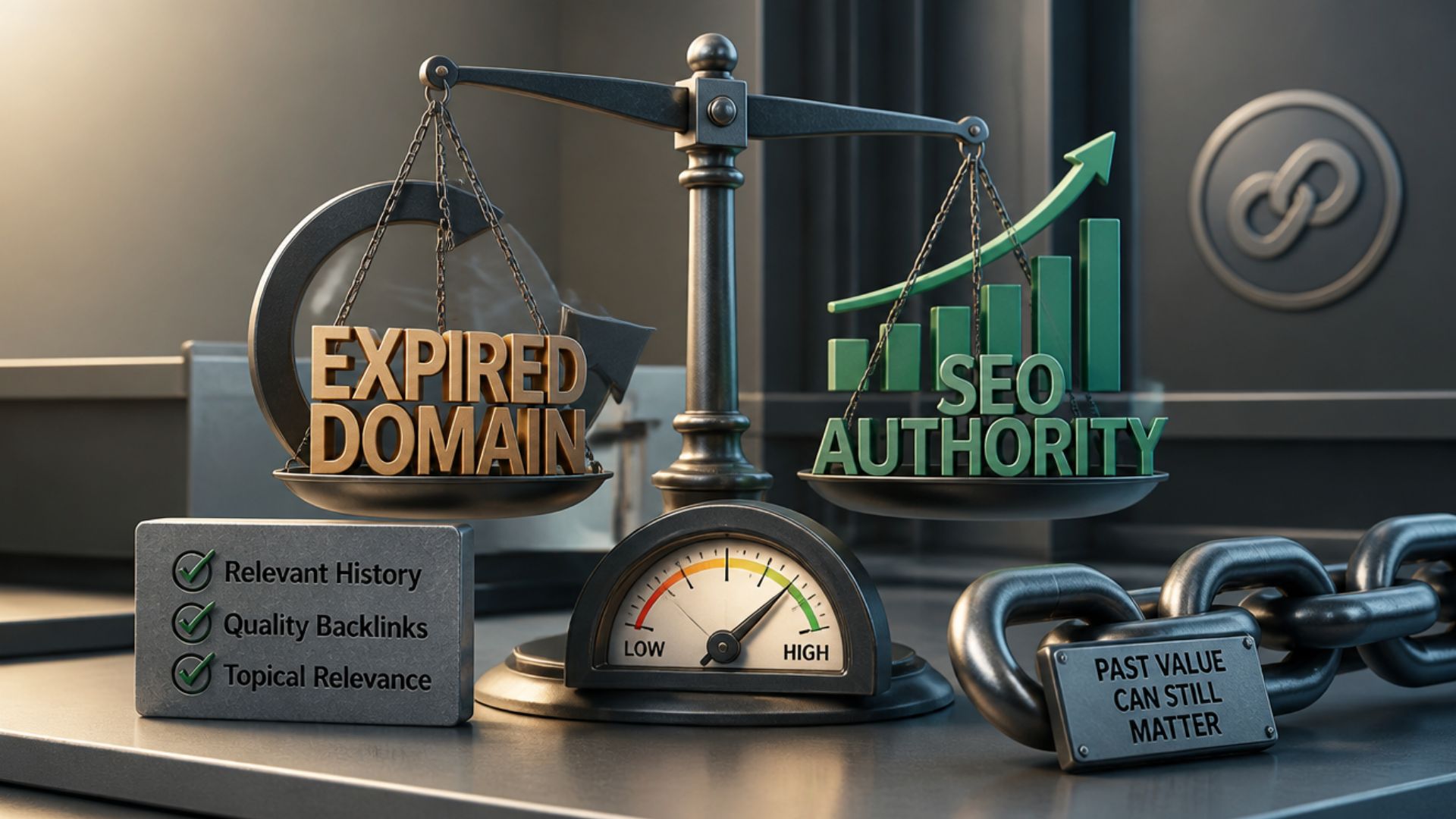
What can matter is the history attached to it. A legitimate site may have accumulated relevant backlinks, useful content, brand mentions, organic traffic, and recognition over time. Those assets can provide a starting point that a newly registered name lacks.
Age Itself Is Not the Asset
Consider two names that have both existed for more than a decade. One may have been used by a real business and earned links from respected industry publications. The other may have sat unused for years or been repeatedly repurposed for unrelated content.
Their registration dates may look equally impressive, but their underlying value can differ greatly.
This is why experienced buyers look beyond the creation date. Age can indicate a name has had time to develop a history, but it doesn’t prove that history is valuable.
What Years of Legitimate Use Can Accumulate
A well-established website can leave behind SEO benefits that remain relevant after an acquisition, including:
- Quality links from relevant websites
- Mentions of the business or publication
- Existing brand recognition
- Historical search demand
- Organic traffic
- A consistent topical footprint
These assets are not guaranteed to transfer in a useful form, and you need to verify their value before purchase. The key is to determine whether the previous use created something worth carrying forward rather than assuming that age itself provides an SEO benefit.
What Makes an Aged Domain Worth a Premium?
Age alone does not justify a higher price. The premium comes from assets that would be difficult or costly to build from scratch. These can include a strong name, quality backlinks, relevant history, existing demand, and scarcity.
A Strong, Brandable Name
A short, memorable, easy-to-spell name can have value regardless of its SEO history. Names that fit a clear market, product, or service can also give a business a stronger brand foundation.
Quality Backlinks
A valuable backlink profile is about quality and relevance, not volume. Links from credible, relevant websites can be more useful than thousands of low-quality or unrelated links. Buyers should examine referring sites, link context, anchor text, and whether important links remain active.
Relevant History
The previous use should make sense for the buyer’s intended project. A site that consistently covered a related subject is generally more useful than one that moved between unrelated topics or was repeatedly repurposed.
Existing Demand
Past recognition can add value when it still exists. Branded searches, direct visits, mentions, and verified organic traffic can indicate that people already know or seek out the name. Historical traffic that has disappeared should not be treated as current demand.
Scarcity
Some names are hard to replace because few comparable options exist. A memorable name with strong commercial relevance and a credible history can command more simply because an equivalent alternative may not exist.

Why Serious Buyers Are Willing to Pay More
The higher price makes sense when the buyer is acquiring something that would take significant time, money, or effort to recreate. The purchase is not simply for an older registration. It is for the useful assets and opportunities already attached to the name.
They Are Buying Time, Not Just a Name
Building a strong online presence from a new registration takes time. A buyer may need years to earn quality backlinks, establish brand recognition, attract organic demand, and build a credible presence in its market.
An established property can potentially shorten that process if its existing assets are relevant and remain useful.
They Are Acquiring an Existing Digital Footprint
A legitimate site may already have references across the web, links from relevant publications, established content history, and recognition within its niche. Recreating those assets from scratch can require substantial outreach, content production, marketing, and ongoing investment.
The premium reflects the value of what already exists, provided those assets withstand proper due diligence.
They May Be Buying Brand Value, Not SEO
For many businesses, the main attraction is the name itself. A memorable, category-relevant address can strengthen branding, improve recall, and make a business easier to find and communicate.
In this situation, the buyer’s valuation may have little to do with search rankings. The name’s commercial value can stand on its own.
The Alternative May Cost More
A cheaper new registration does not necessarily provide the same opportunity. If an established name already has strong branding, relevant recognition, or valuable links, building an equivalent asset independently could cost far more than the acquisition price.
The key question is therefore not “Why is this more expensive than a new registration?” but “What would it cost to build the same assets from zero?”
When an Aged Domain Is Not Worth the Premium
An older name can look attractive in an auction or marketplace listing and still be a poor investment. A high asking price is difficult to justify when the underlying assets are weak, irrelevant, or risky.
- Old but inactive: Years of registration mean little if the name has no meaningful history, links, traffic, or recognition.
- Large but poor backlink profile: Thousands of links from spammy, irrelevant, or low-quality sites do not automatically create value.
- Irrelevant history: A previous site about an unrelated subject may offer little practical benefit for a completely different project.
- Manipulated metrics: High third-party scores can be misleading when they are supported by artificial links or other questionable tactics.
- Weak name: An old registration doesn’t make an awkward, hard-to-spell, or commercially irrelevant name more desirable.
- No existing demand: Historical traffic or recognition has limited value if there is no evidence that people still search for or visit the name.
- Trademark concerns: A seemingly valuable name can become a liability if using it creates trademark or brand-confusion issues.
Aged Domain vs. New Domain: Which Is Better?
Neither option is automatically better. The right choice depends on whether the existing history and assets justify the additional cost and due diligence.
| Factor | Aged Domain | New Domain |
| Starting cost | Usually higher | Usually low |
| History | Existing | None |
| Backlinks | May have existing links | Must be earned |
| Brand opportunity | Depends on the available name | Full freedom to choose |
| Inherited risk | Possible | Minimal |
| Topical baggage | May exist | None |
| Due diligence | More involved | Simpler |
| Best suited for | Projects that can benefit from existing assets | Projects that need a clean start |
An older acquisition can make sense when it combines a strong name with relevant history and verified assets. A new registration may be better when the available options are weak, the historical profile raises concerns, or the premium cannot be justified.
Conclusion
An aged domain can command a premium, but its age is rarely the reason to pay more. The real value lies in what has been built around the name: a strong brand, relevant history, quality backlinks, existing demand, or a combination of these assets.
Serious buyers do not treat age as proof of value. They investigate what the name has been used for, assess the quality of its existing assets, check for risks, and compare the acquisition with starting from scratch.