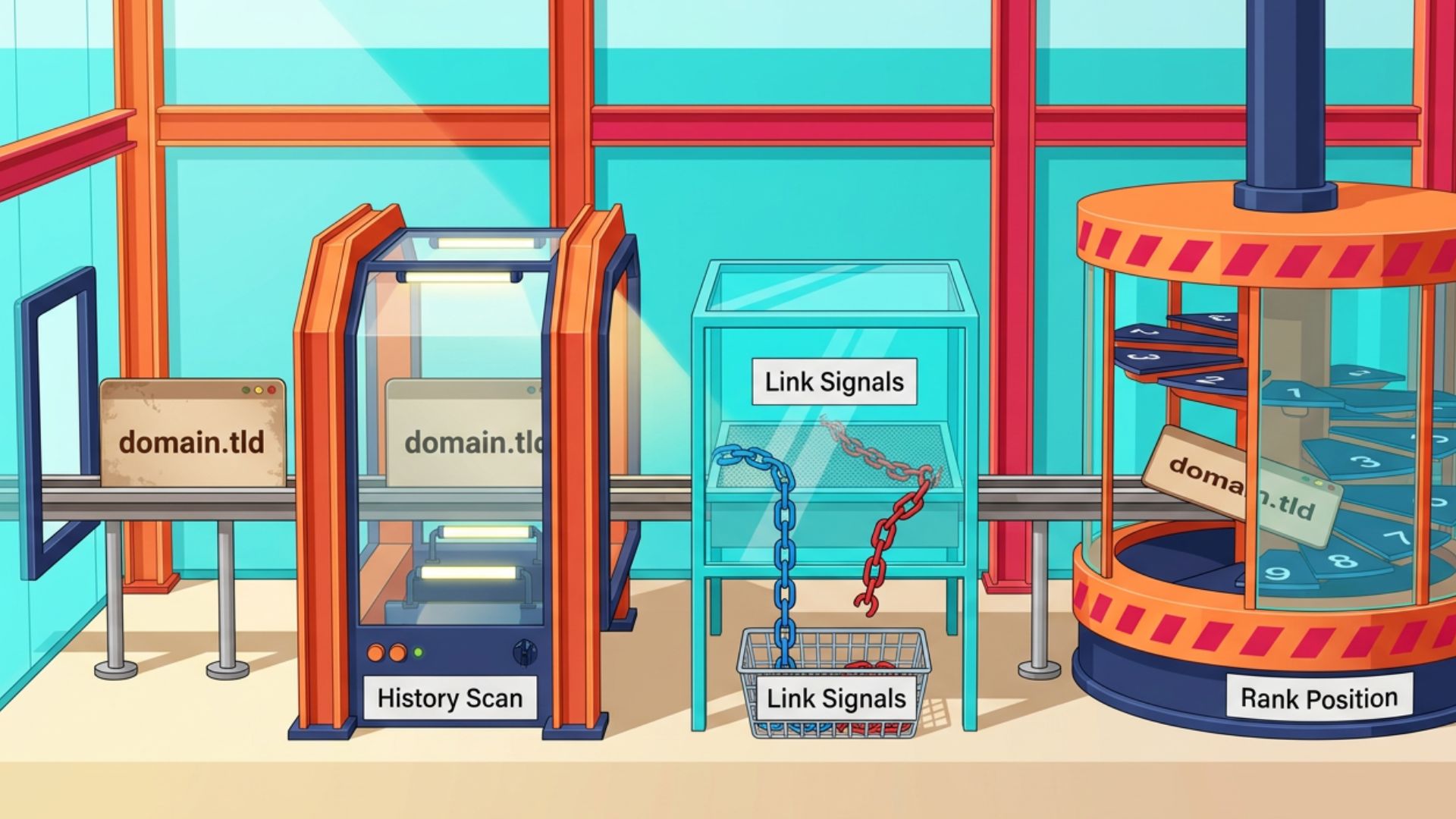
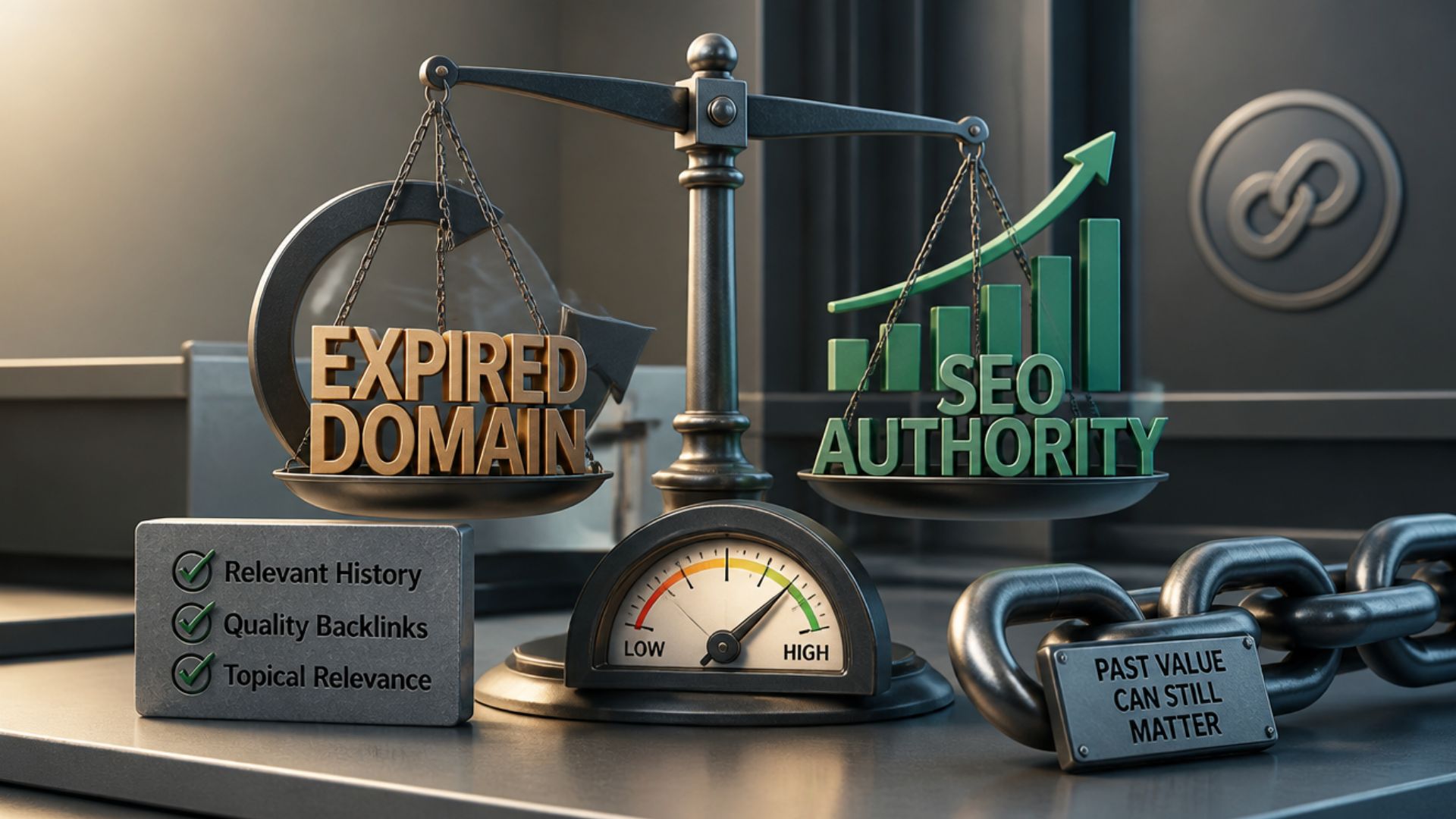
An expired domain can look like a shortcut: existing backlinks, a familiar name, and SEO metrics that appear stronger than a new site’s. That appeal leads many site owners to assume they are buying a ready-made ranking advantage. The reality is more conditional. Some assets may still be useful, but their value depends on the site’s history, the relevance of the replacement, and how search engines assess the new content. Before purchasing or rebuilding one, it is important to separate measurable signals from SEO value that can genuinely support long-term visibility.
The Short Answer
Expired domains can retain useful signals, but they do not come with a guaranteed ranking advantage.
Existing backlinks may still point to the site, and some people may continue to search for its former brand or visit through old links. Third-party tools may also continue to show historical metrics such as Domain Authority. None of those signals means Google will automatically trust or rank the new site.
What matters is what the site becomes after purchase. If the new content is relevant, useful, and built for the same or a closely related audience, the remaining links and traffic may provide value. If it is repurposed primarily to exploit its past reputation through low-value or unrelated content, it may fall under Google’s expired domain abuse policy.
What Actually Happens When a Domain Expires
Expiration does not erase a site’s history overnight. It only means the previous registrant did not renew the name by the required date. Depending on the registrar and registry, the name may enter a grace period, redemption period, auction, or pending-delete stage before it becomes available for public registration. During that time, the former website may go offline, and its pages can gradually disappear from Google’s index.
When someone registers the name again, they acquire the address, not the previous site’s rankings, content, or automatic trust. Old backlinks can remain live because other websites still link to those URLs. Historical records may also remain visible in SEO tools. However, those signals are not fixed assets. Publishers can remove or change their links, old pages may no longer match the new site, and Google can reassess the value of links when the content or purpose of the site changes.
What Can Remain After You Buy an Expired Domain
Buying an expired domain gives you control of the name and, potentially, access to assets that still exist around it. It does not restore the former website. The most valuable asset is often its backlink profile. If reputable sites still link to relevant old pages, those links can continue sending referral visitors. They may also provide SEO value when the new pages genuinely satisfy the purpose those links originally supported.
Brand searches can persist as well, particularly when the former business had a recognizable name. That interest is only useful if the new site has a legitimate connection to what people expect to find.
Some SEO tools will still report historical signals, including referring domains, backlinks, and Domain Authority. Treat these as research inputs, not proof of future organic performance. A strong score can reflect links that are irrelevant, removed, redirected poorly, or no longer counted by Google.
“Domain Authority” Is Not Google Authority
A high Domain Authority score can make an expired domain look more valuable than it is. However, Domain Authority is a third-party metric created by Moz. It estimates a site’s likely ability to rank based largely on its link profile; Google does not use it as a ranking factor.
The same principle applies to similar scores from Ahrefs, Semrush, Majestic, and other SEO platforms. They can help assess a backlink profile, but they cannot confirm how Google evaluates those links or whether they will benefit a new site.
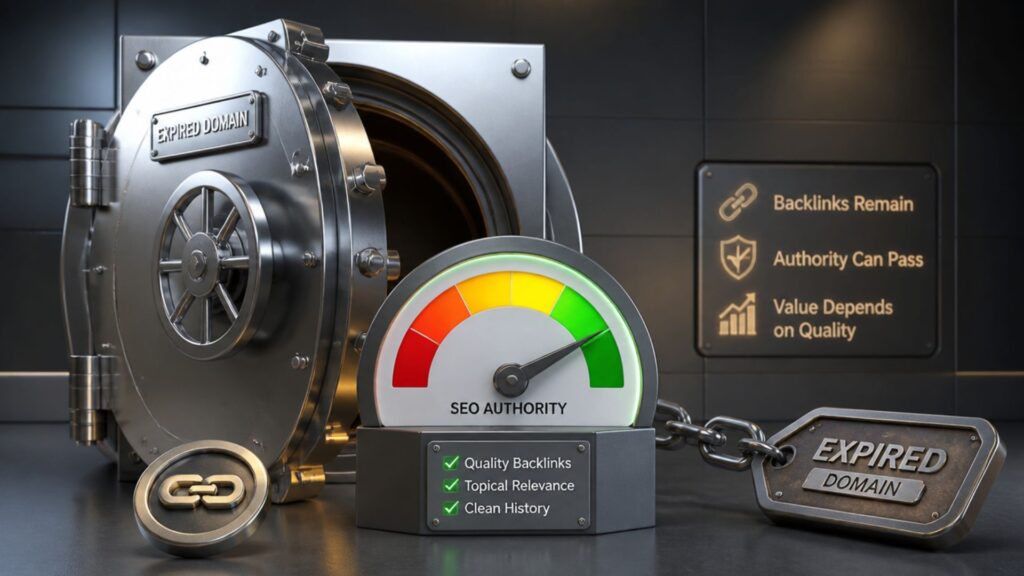
Use these metrics to investigate, not to decide. A higher score may reflect a genuinely strong history, but it can also include irrelevant links, lost pages, manipulated links, or links Google chooses to ignore. The better question is whether the remaining links are credible, relevant, and likely to help real users reach content that matches their original intent.
Do Backlinks From an Expired Domain Still Help SEO?
They can, but only under the right conditions.
A backlink does not disappear simply because a registration lapses. If another site still links to an old URL, that link may continue to send visitors once the site is live again. Google may also use it as one of many signals when assessing the destination page.
The key question is relevance. A link earned by a former gardening site is far more likely to make sense when it points to useful gardening content than when it leads to an unrelated finance or casino page.
Quality matters just as much. Links from reputable, editorially maintained sites are more meaningful than links from low-quality directories, comment spam, or private blog networks. A large backlink count alone says very little.
Redirects also need a clear purpose. Redirecting an old page to a closely related replacement can help users find what they expected. Sending every former URL to a homepage or an unrelated page is less useful for visitors and unlikely to create lasting SEO value.
When an Expired Domain Can Be a Legitimate SEO Asset
An expired domain can make sense when the new site continues, restores, or closely supports its original purpose. For example, a business may reacquire its former name, a new owner may preserve a relevant publication, or an organization may rebuild useful resources for the same audience.
In these cases, old links have a logical destination. Visitors who follow them can find up-to-date information that still explains why the link was placed in the first place.
The work still needs to stand on its own. Publish original, useful content, rebuild relevant pages where possible, and redirect old URLs only when there is a clear equivalent for users. Google’s guidance permits using an old name for a new, people-first site; the issue is that it uses its past reputation as a shortcut for low-value search traffic.
When It Becomes Expired Domain Abuse
The line is crossed when a buyer uses a former site’s reputation mainly to manipulate search results rather than serve visitors.
Google calls this expired domain abuse. Its policy targets cases where an expired name is repurposed with low-value content to benefit from its previous reputation, for example, turning a former charity or school site into an unrelated affiliate, casino, or commercial site.
A change of ownership is not the issue. A major change in topic is not automatically a violation either. The problem is intent and execution: using the old site’s links and perceived trust as a shortcut while offering little original value.
Google states that sites violating its spam policies may rank lower or be removed from Search results. The safer approach is simple: build the new site for the audience it intends to serve, not for the ranking signals tied to its past. Google’s spam policy makes clear that an old name can still support a new, original, people-first website.
How to Evaluate an Expired Domain Before Buying It
Do not buy based on a high metric alone. Review the site’s history, links, visibility, and whether you have a legitimate plan for its future use.
- Review its previous purpose: Use the Wayback Machine to check what it published, who it served, and whether the topic changed repeatedly. A stable history that aligns with your planned site is generally less risky.
- Assess backlink quality, not volume: Check where links come from, the pages they reference, and whether they are still live. Prioritize relevant editorial links over a large number of low-quality links.
- Inspect anchor text and link patterns: Be cautious of excessive exact-match anchors, unrelated foreign-language links, link spikes, directories, comment spam, or private blog network patterns. These can indicate manipulation rather than earned recognition.
- Check indexation and search visibility: Search the former brand name and review whether old URLs still appear in Google. A lack of indexed pages is not proof of a penalty, but it warrants closer investigation.
- Look for genuine traffic signals: Historic organic traffic and active referral visits can be more meaningful than a strong third-party metric with no evidence of real users.
- Check legal and reputation risks: Search the previous brand, business, and owners for trademark conflicts, scams, regulated-industry issues, or reputational problems you may inherit.
- Plan the rebuild before buying: Decide what useful, relevant content you can publish and which old URLs have a clear replacement. If you cannot build for a closely related audience, starting with a new domain is often the safer choice.
Conclusion
Expired domains can retain links, referral traffic, and historical signals, but none guarantees better rankings. Their value depends on whether the remaining assets are credible, relevant, and supported by a useful new site.
Do not buy based on Domain Authority or backlink counts alone. Choose a name only when its history fits your plan, its links make sense for the content you will create, and the site can serve a real audience without relying on past reputation as a shortcut.